HMS
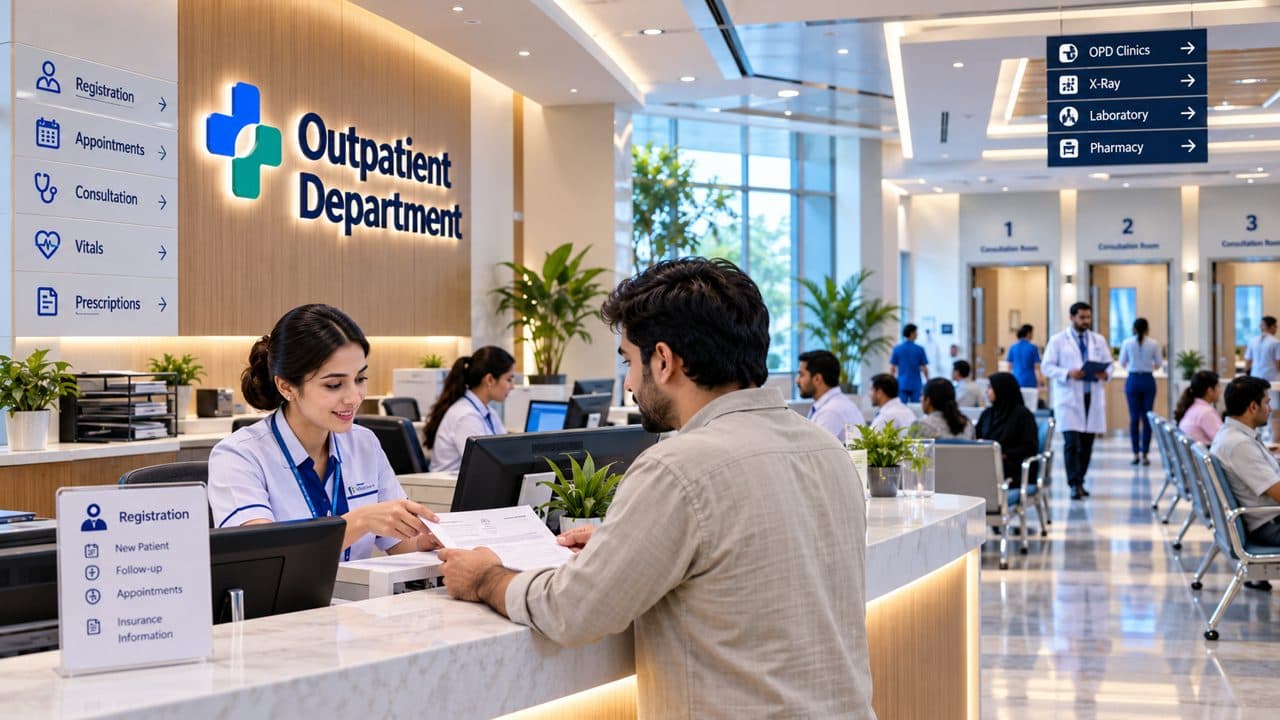
Reception & OPD
Registration with MRN, appointments, tokens, vitals, consultation and prescriptions.
HMS connects reception, clinical care, diagnostics, pharmacy, billing and finance on one patient record, for every hospital and branch you run.
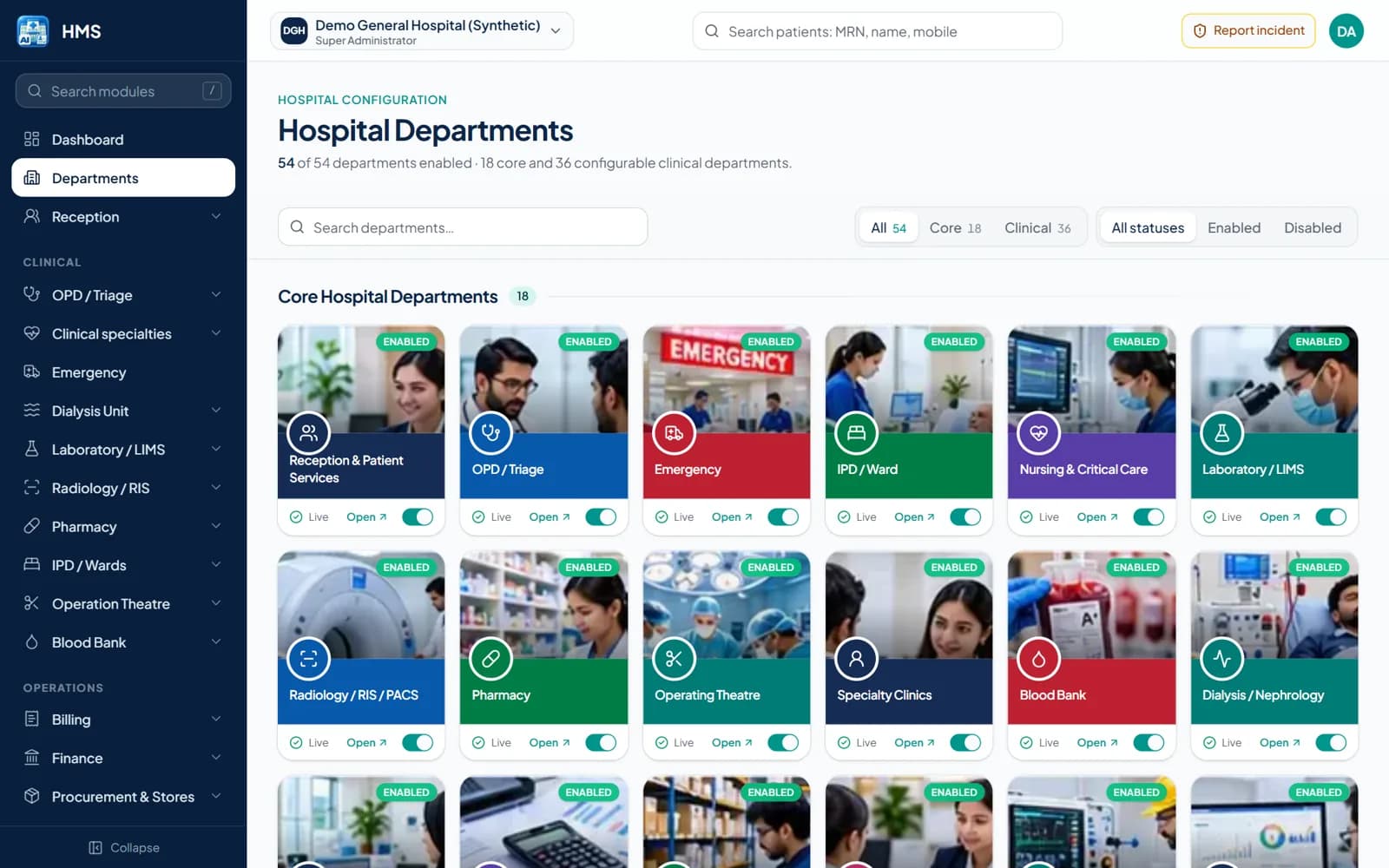
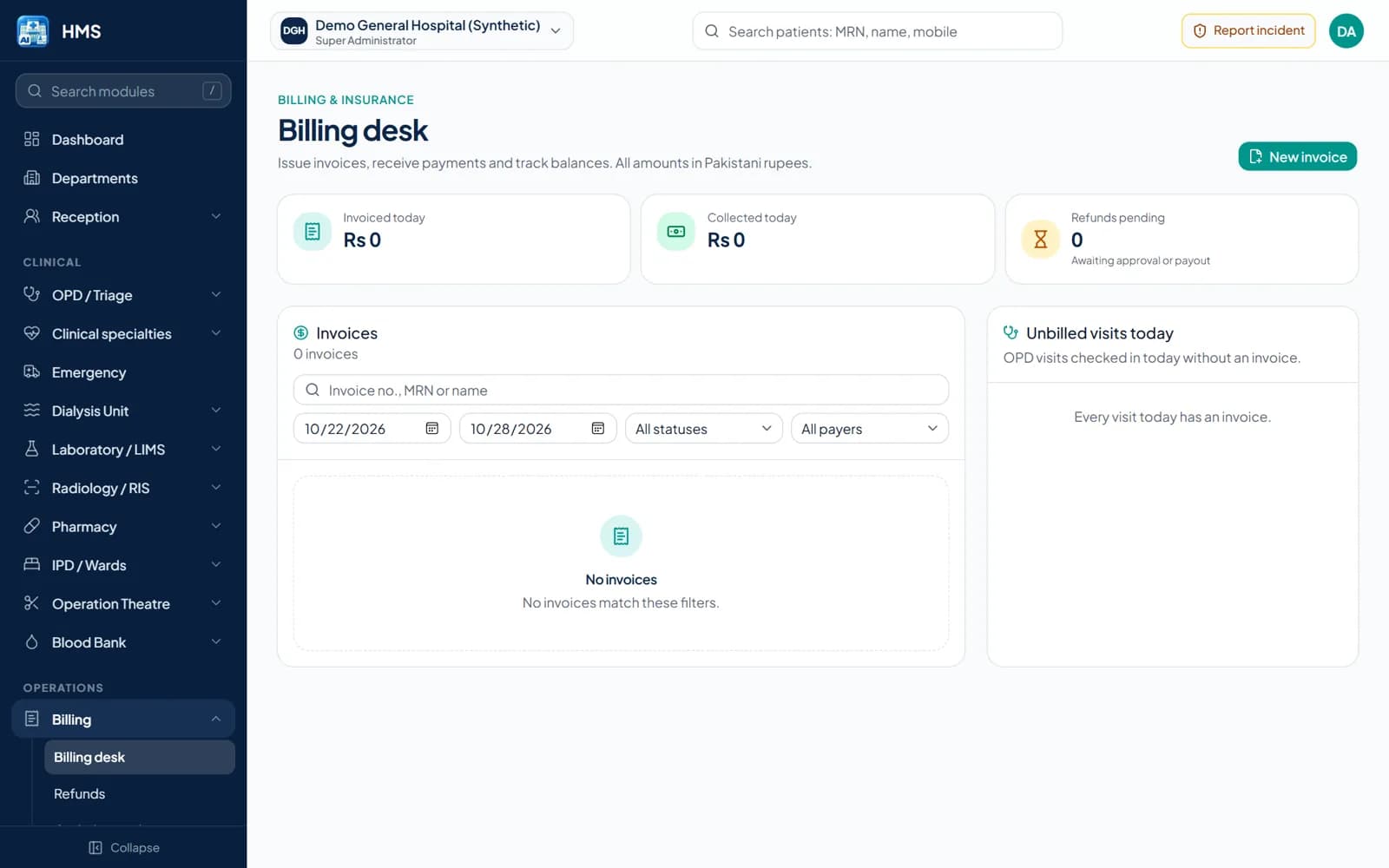
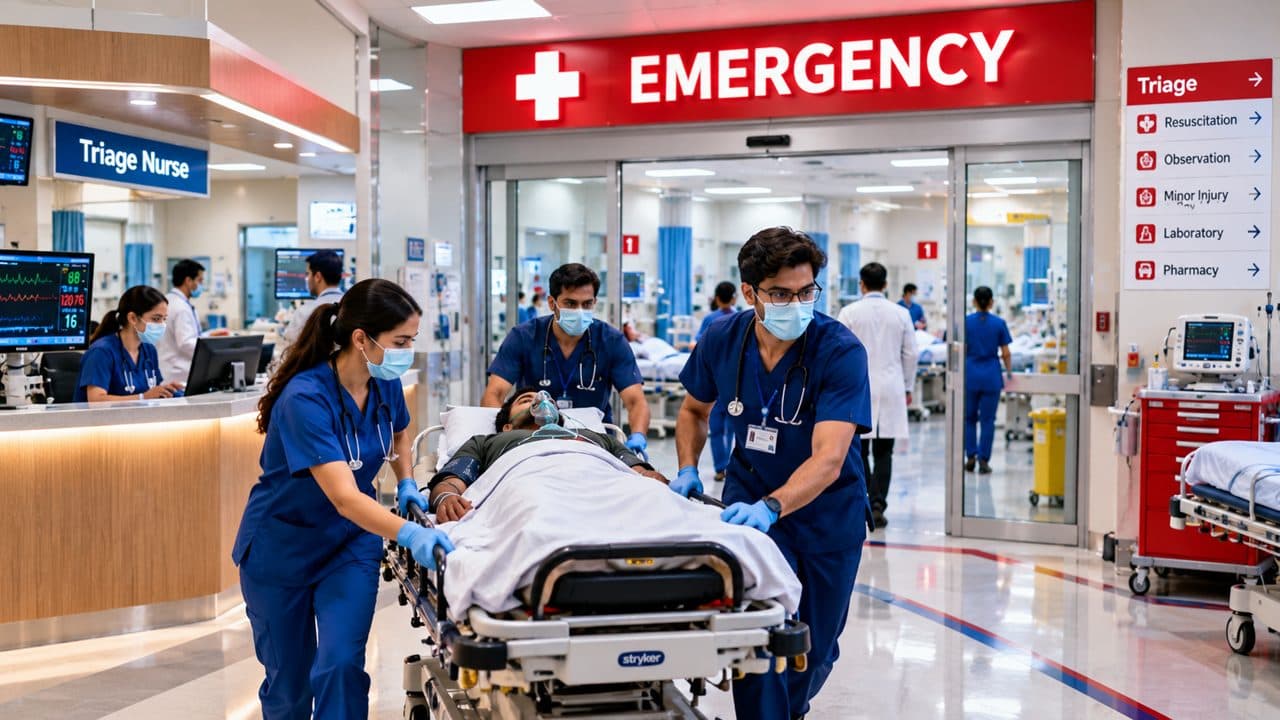
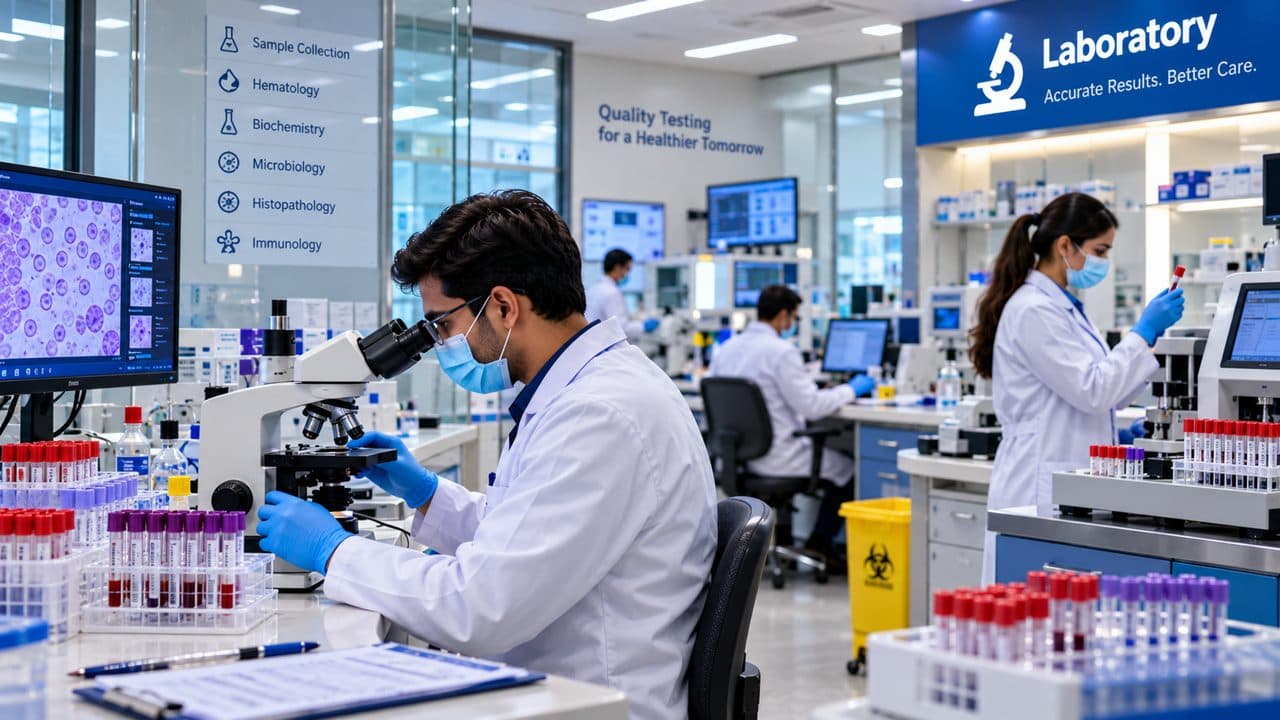
The same patient record moves through reception, emergency, theatre, the lab and the pharmacy, in every hospital and branch you run.


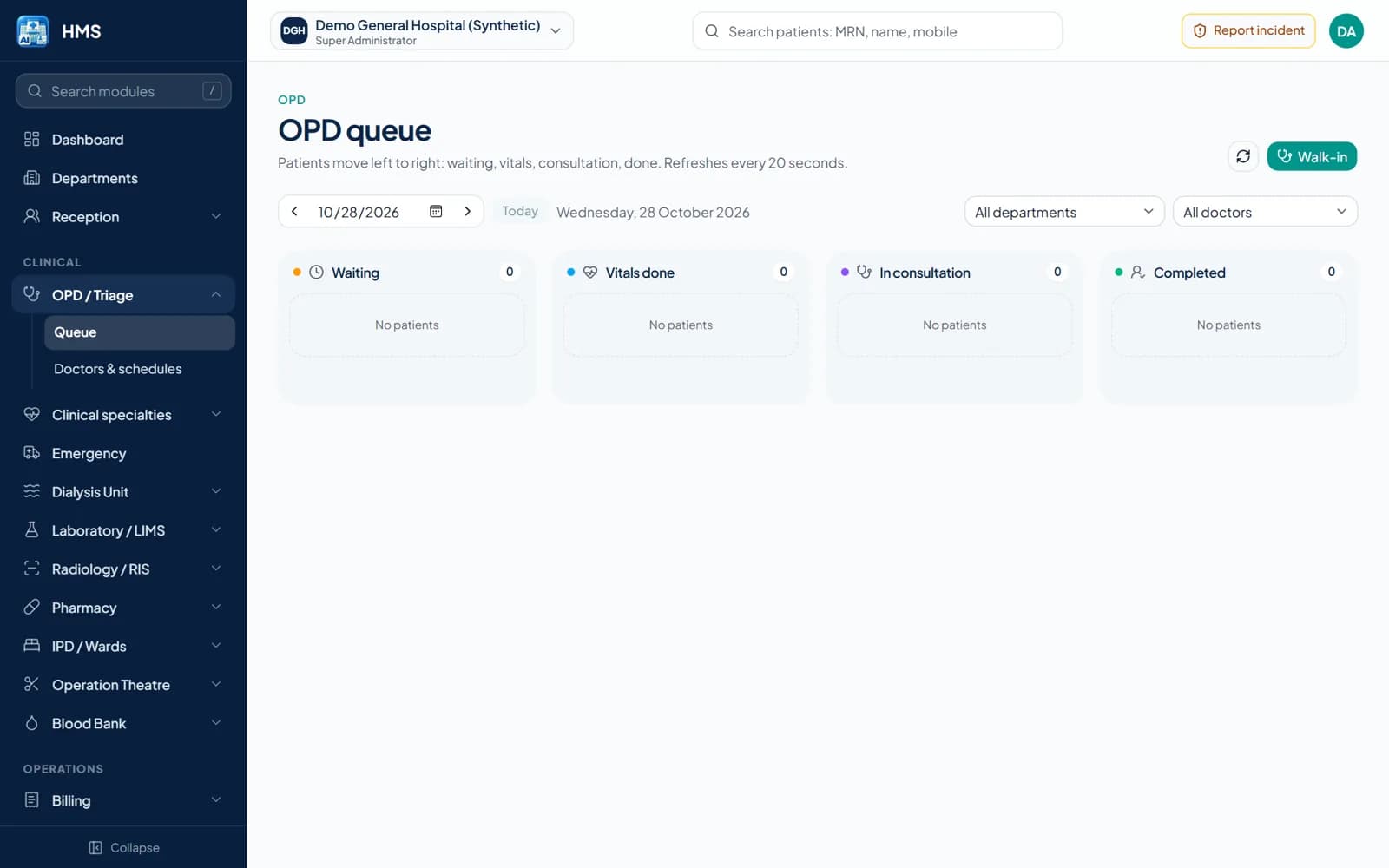
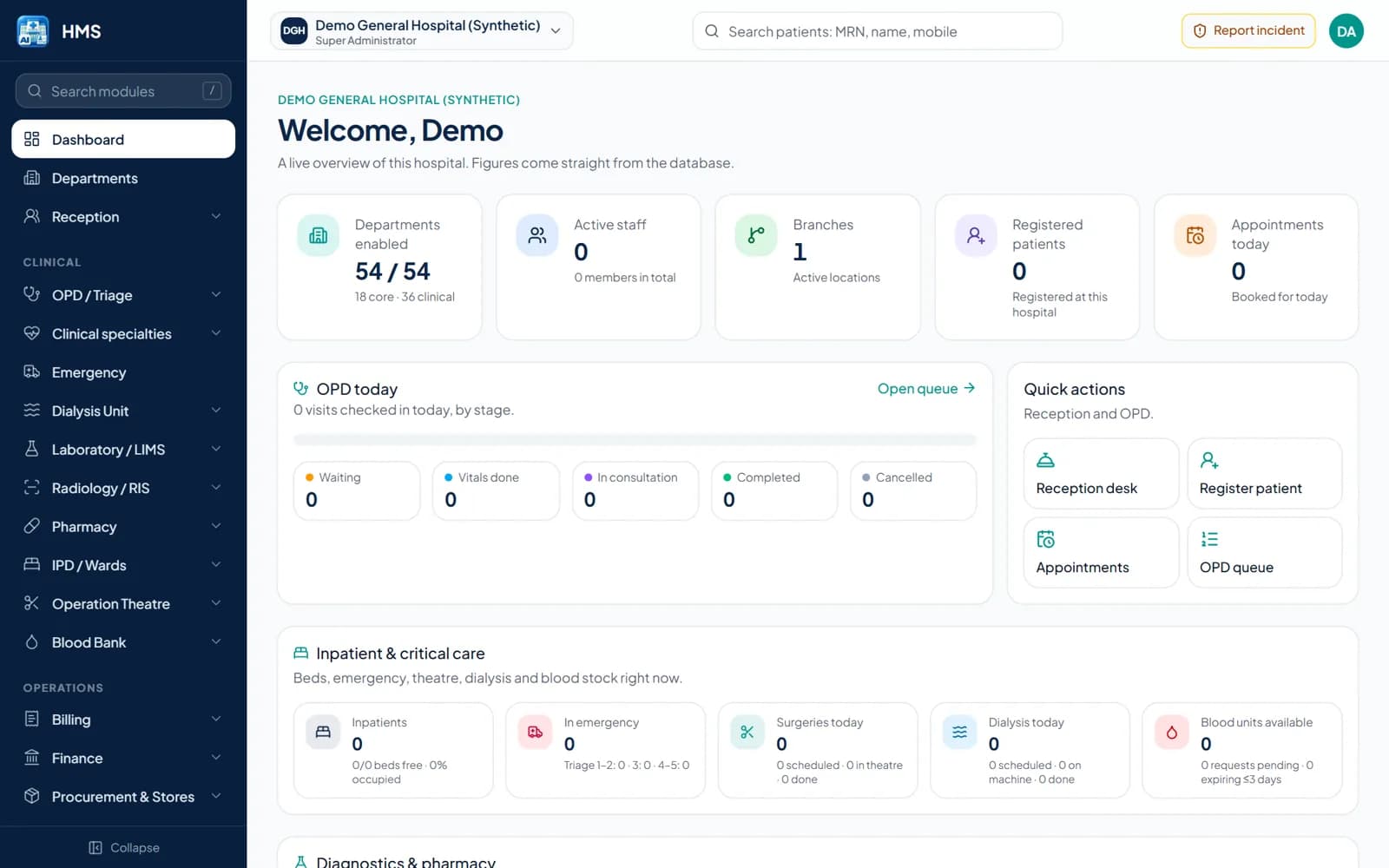
These are the real HMS screens, running on synthetic demo data.
Departments, staff, patients, OPD stages, beds, theatre, dialysis and blood stock, straight from the database.
Orders, results, bills and journals pass from one module to the next on the same record. Each hospital switches on the departments it runs, from 54 in the catalogue.
Registration with MRN, appointments, tokens, vitals, consultation and prescriptions.
Triage levels 1–5, MLC details, disposition and admission from the ER.
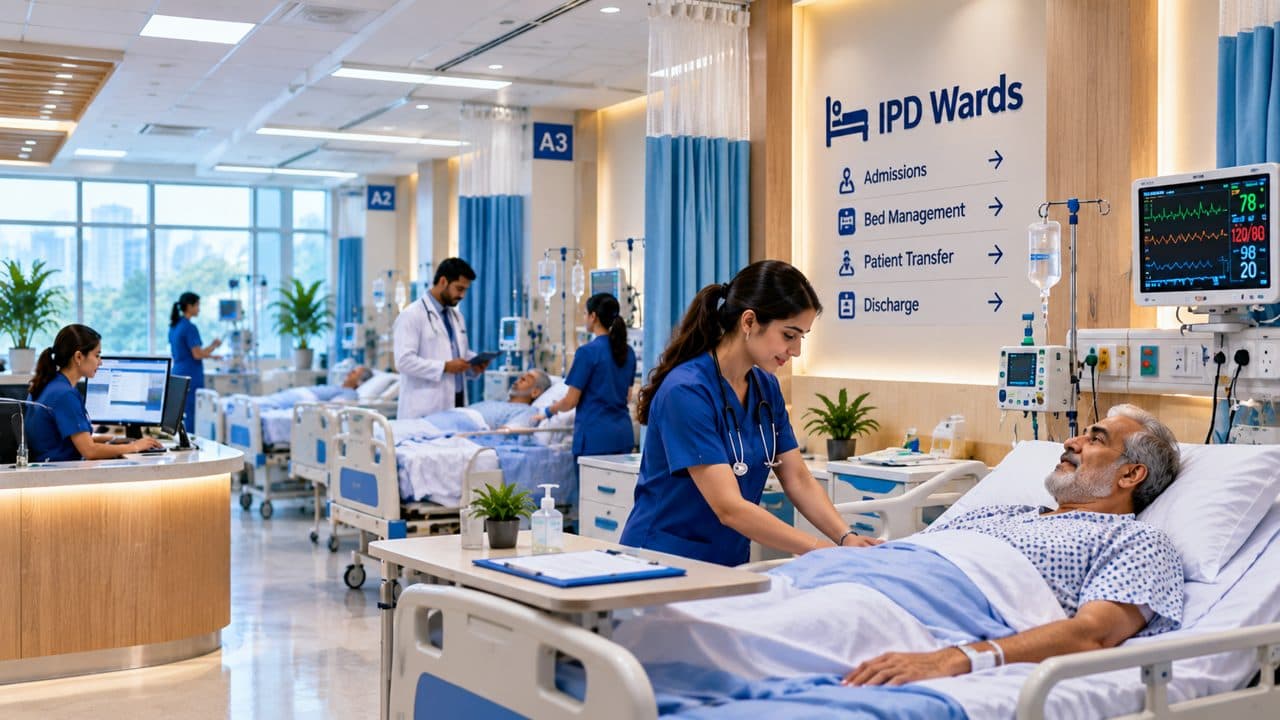
Bed board, admissions, transfers, MAR, nursing notes and discharge summaries.
Theatre booking with clash checks and the WHO surgical safety checklist.
Barcoded samples, results with critical flags and verification by a second person.
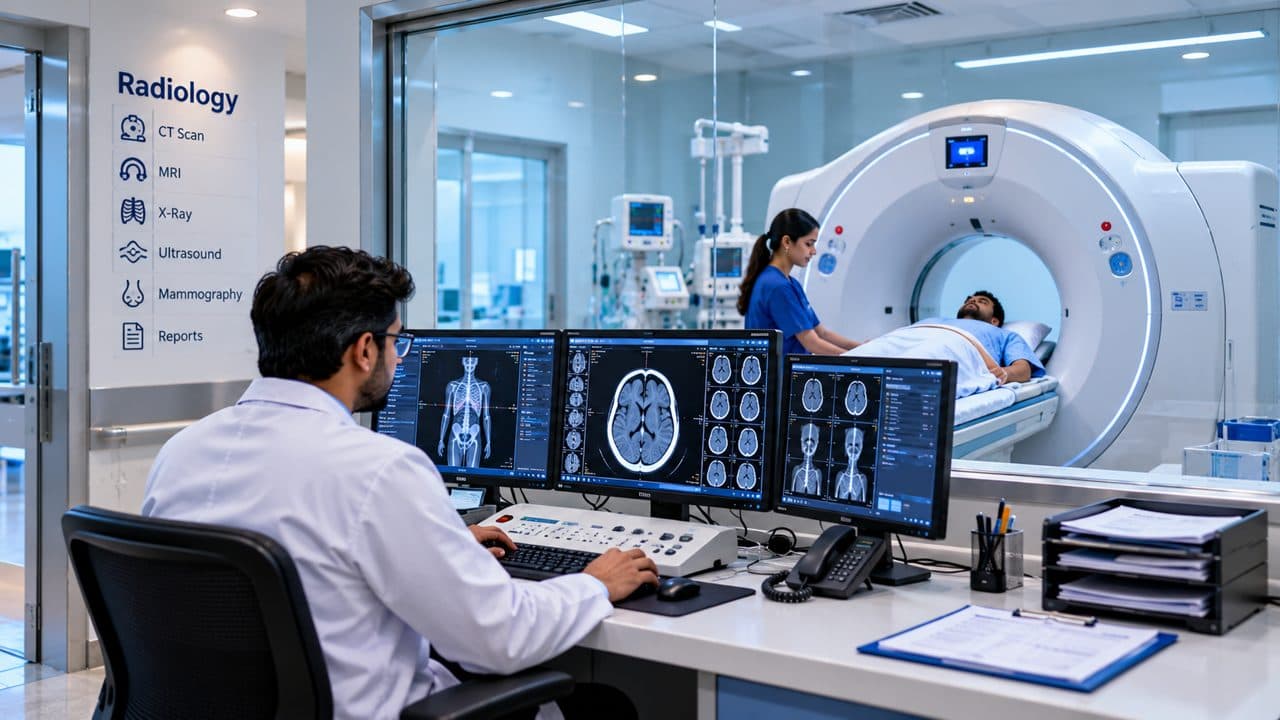
Scheduling, PACS study UIDs, reporting and radiologist sign-off.
Formulary, batch and expiry stock, earliest-expiry-first dispensing.
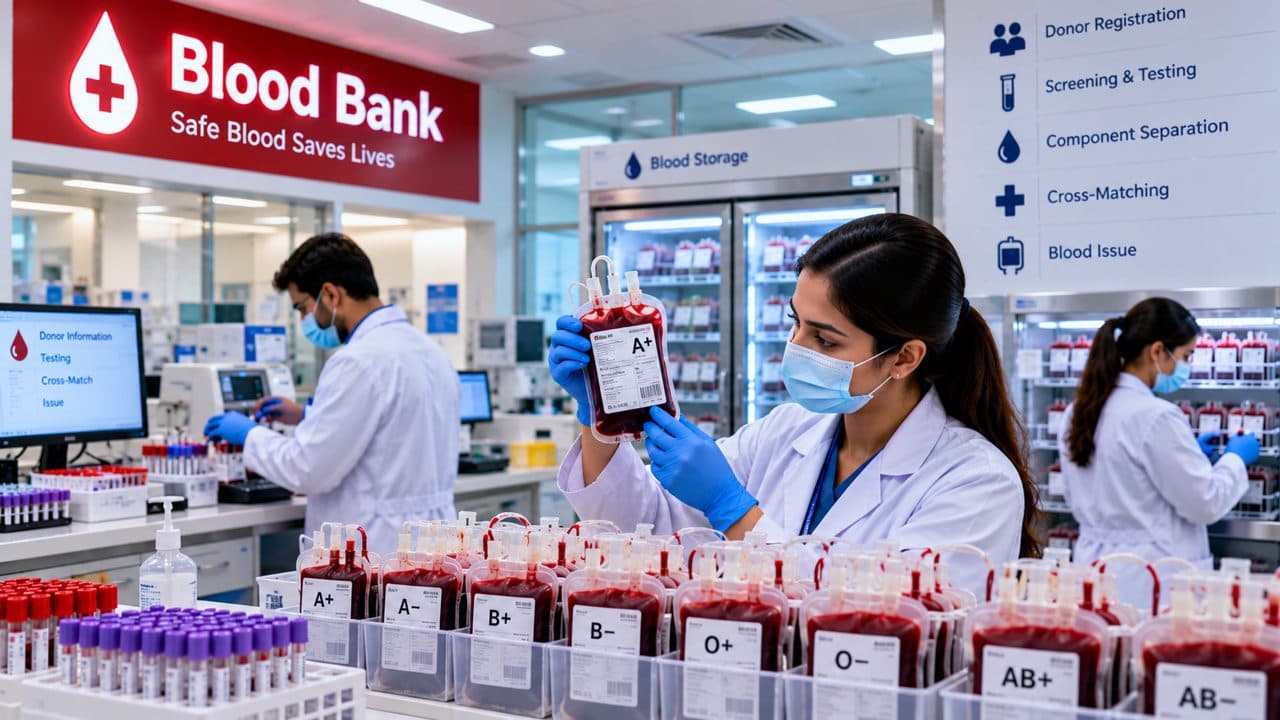
Donors, screening, units, cross-match and issue with compatibility checks.
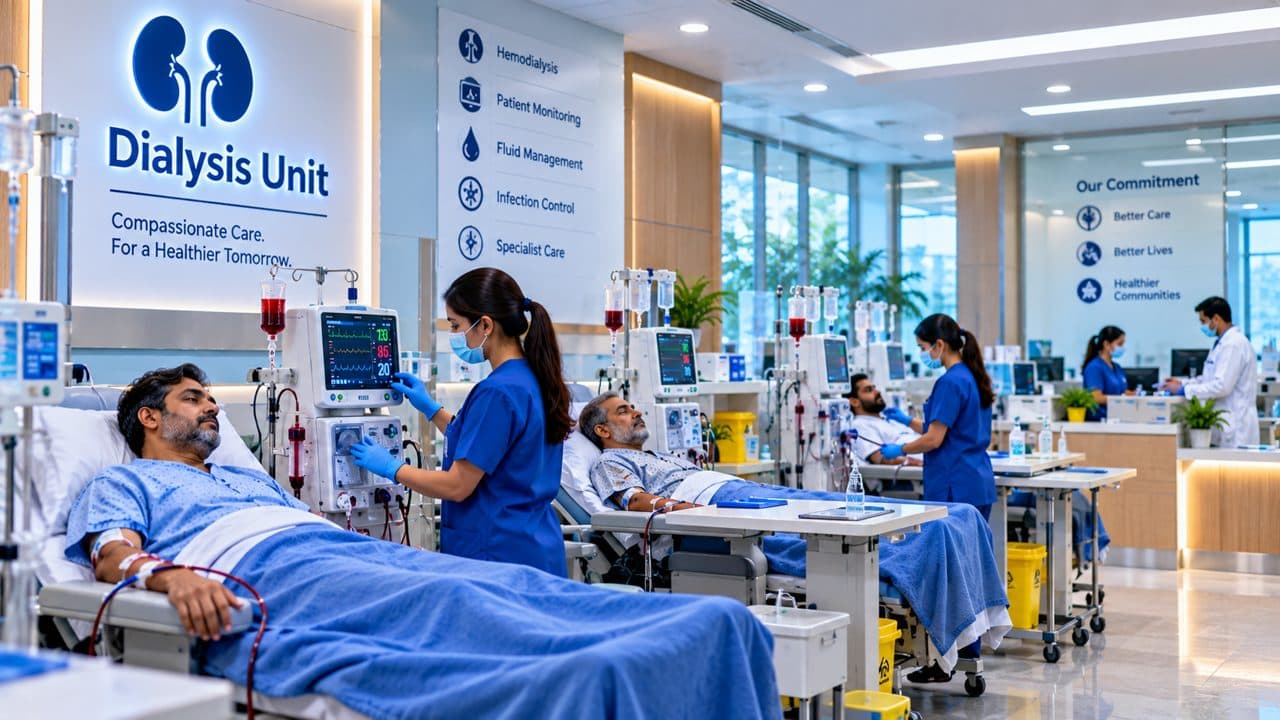
Serology-gated scheduling, machine isolation and the full session flow.
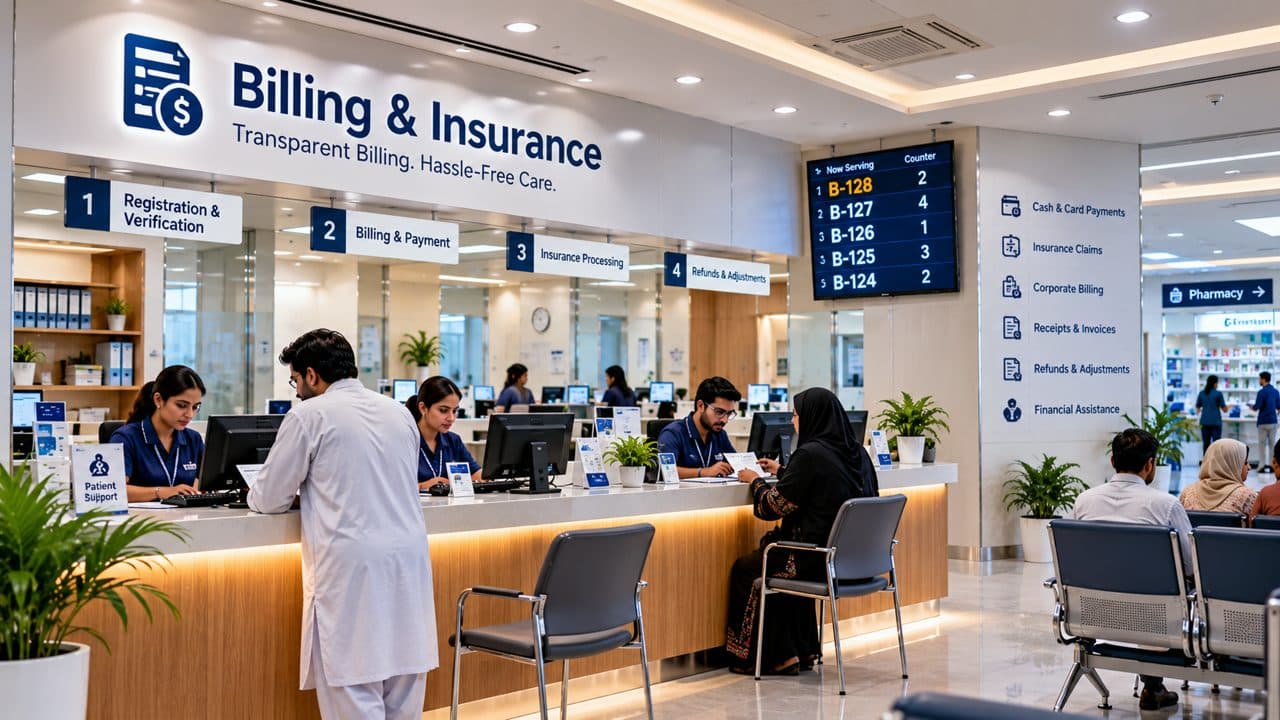
Server-side pricing, panels and welfare, refunds and cashier day-end.
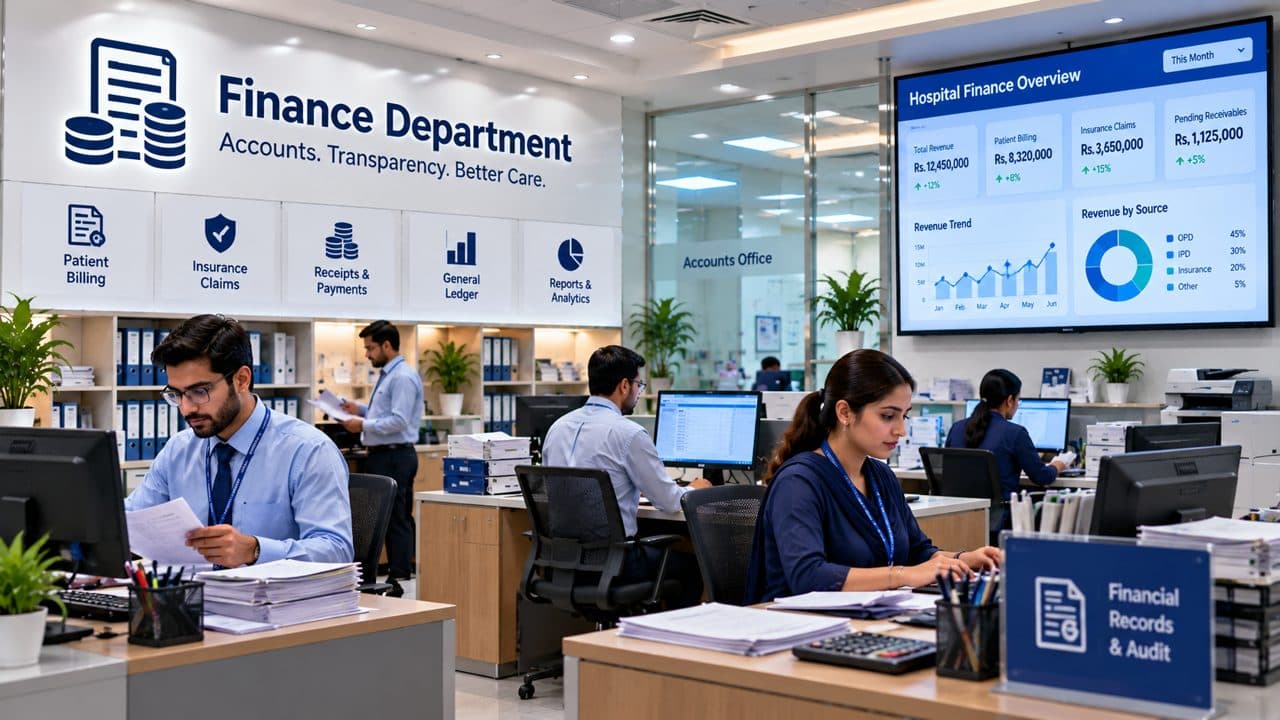
Double-entry journals, ledgers, trial balance and collection reports.
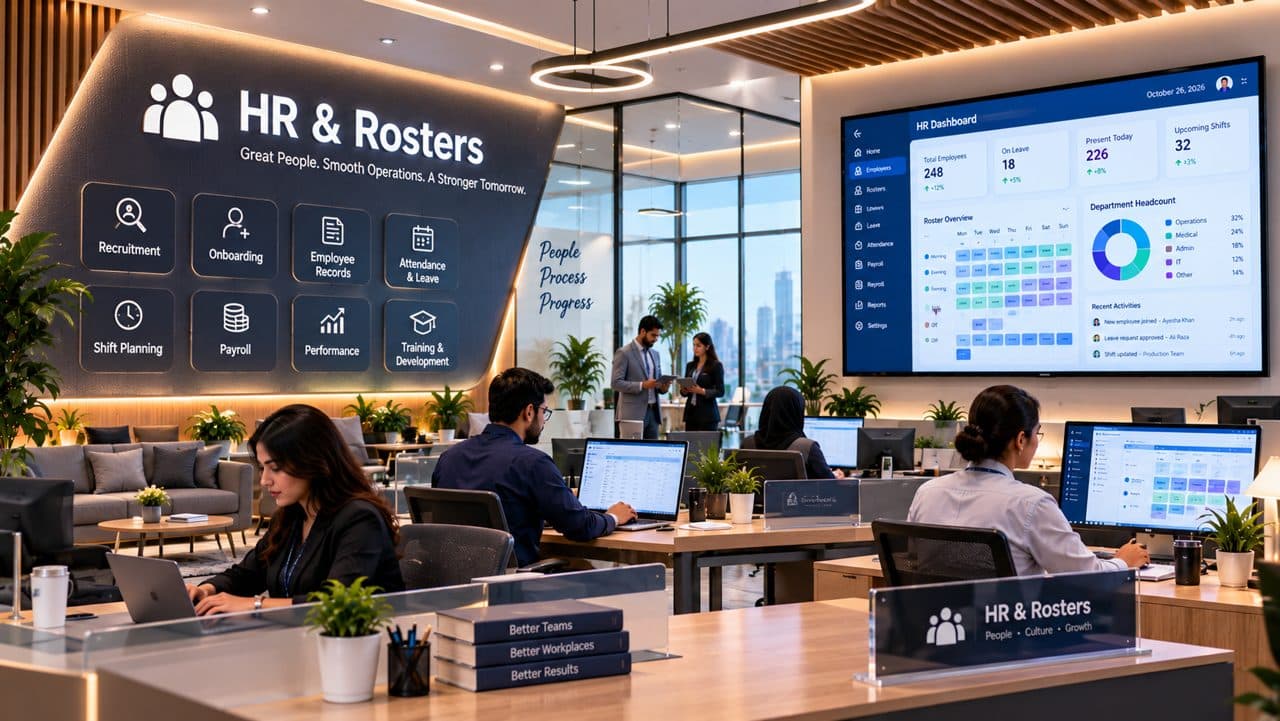
Staff directory, duty rosters and leave self-service.
Three steps, the same for a single clinic or a hospital group.
Switch on the departments you run, add branches, and invite staff with the role each one needs.
Register patients with an MRN, run the OPD queue, and send orders to lab, radiology and pharmacy.
Invoice in rupees, collect payments, close the cash day-end, and read the ledgers and reports.
Every request is checked against the user's hospital membership.
Each screen and action needs its own permission.
CNICs are encrypted at rest and searched by a secure index.
Sign-ins, record views and sensitive changes are logged.
Cash, card, bank, cheque, Easypaisa, JazzCash and Raast.
SEHAT, insurance, corporate panels and Zakat coverage on the same invoice.
One patient identity across hospitals, matched by CNIC.
Bilingual advice and prescription labels for patients.
Accounts are created by your hospital administrator. Sign in with the email they registered for you.